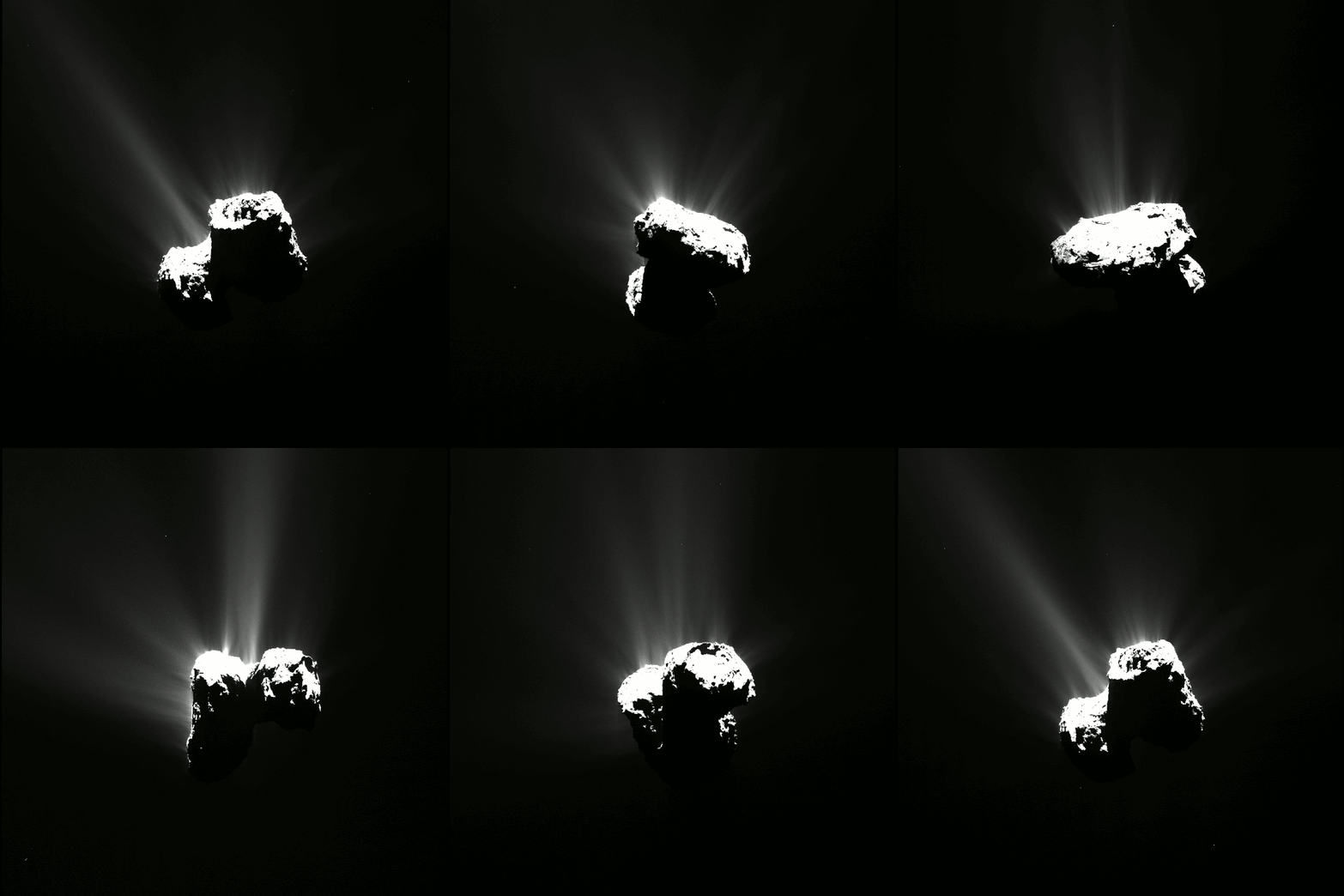
 Comet 67P/Churyumov–Gerasimenko a few hours before the comet reached the closest point to the Sun. Credit: ESA/Rosetta/MPS for OSIRIS Team MPS/UPD/LAM/IAA/SSO/INTA/UPM/DASP/IDA
For the first time in human history, a spacecraft has observed a comet nucleus become active as it reaches perihelion – the point in its orbit when it is closest to the Sun. The Rosetta spacecraft rendezvoused with comet 67P/Churyumov–Gerasimenko in August of 2014, and has watched the comet become active in recent weeks as it neared the Sun.
These images, and the science being returned from the Rosetta mission are nothing short of spectacular. Hats off to the ESA and Rosetta mission team!
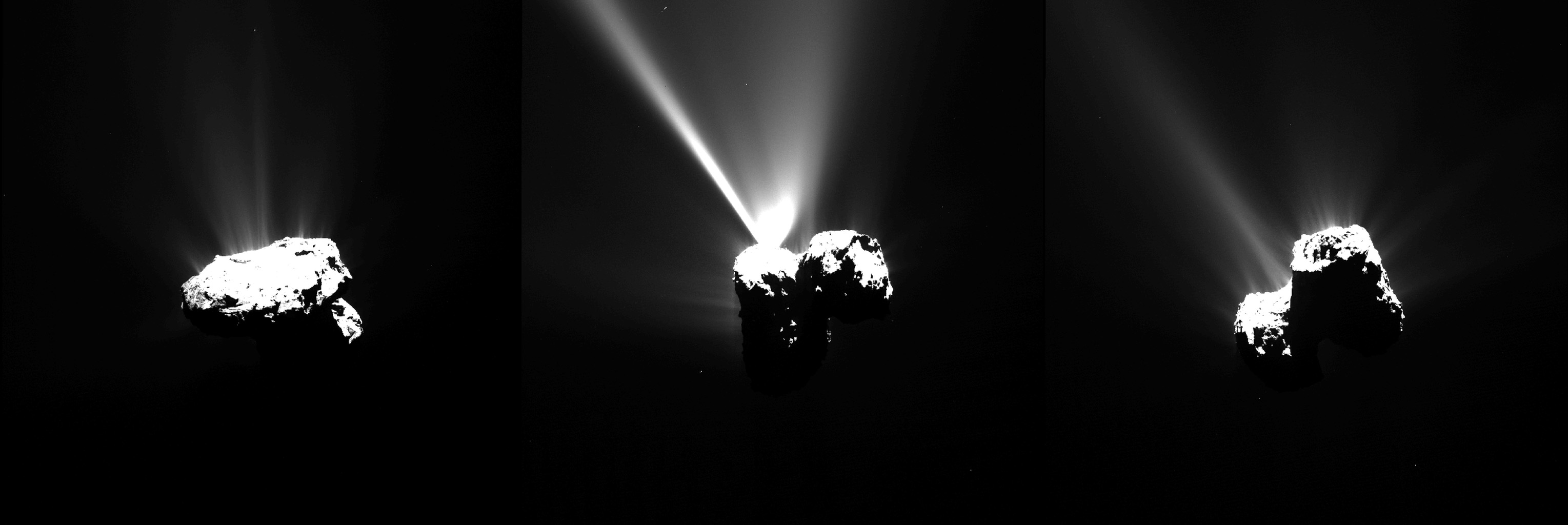 Comet 67P/Churyumov–Gerasimenko nearing perihelion.Credit: ESA/Rosetta/MPS for OSIRIS Team MPS/UPD/LAM/IAA/SSO/INTA/UPM/DASP/IDA
Read the full story here: Rosetta’s big day in the Sun
Mission Timeline: Here