Stellarium version 0.19.0 has been released; I use Stellarium to create images for every one of these posts. When I receive new outreach requests, I frequently use Stellarium to see what the nighttime sky will look like on those future dates. The new version has code optimizations, some user interface improvements, and includes 5 new sky cultures. Stellarium is free, and available for the PC/MAC/Linux.
Saturn, Jupiter and the star Antares appear in south-southeastern predawn sky this week.
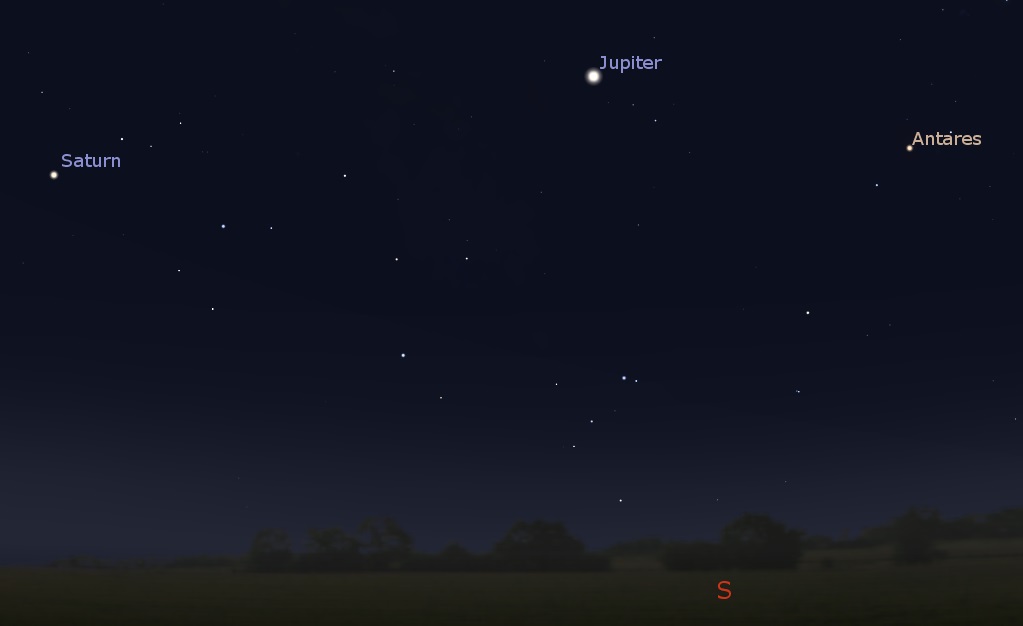 Saturn, Jupiter and the star Antares in south-southeastern predawn sky. Credit: Stellarium / Bob Trembley.
Mars continues to appear high in the western sky by the Pleiades all week.
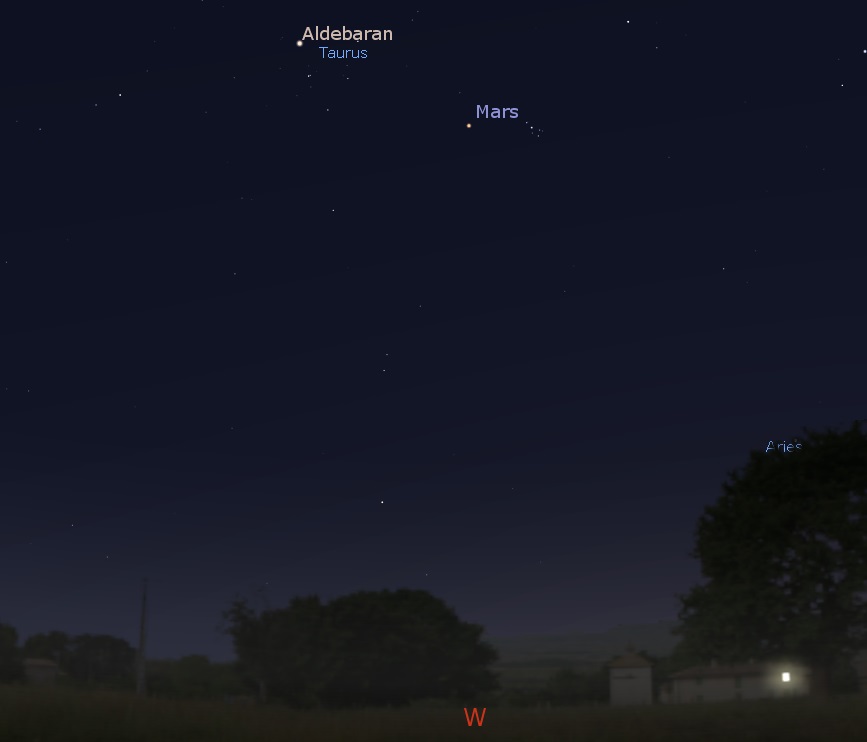 Mars near the Pleiades high in the western sky after dark on Apr. 2, 2019. Credit: Stellarium / Bob Trembley.
A very thin waxing crescent Moon appears low in the western sky after sunset on Apr. 6th.
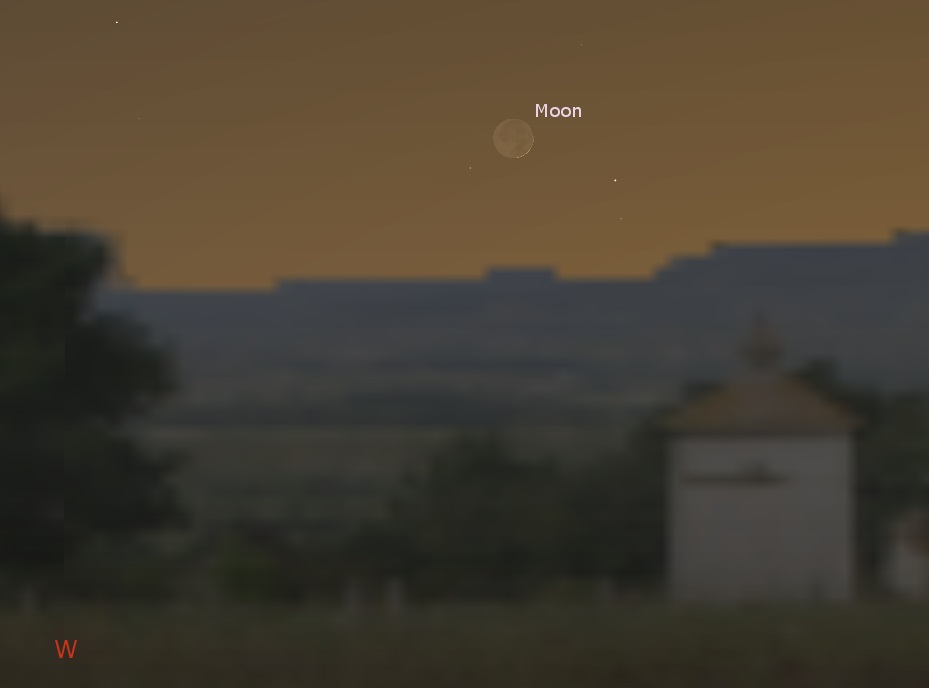 A thin waxing crescent Moon in the western sky at dusk Apr. 6, 2019, Credit: Stellarium / Bob Trembley.
Mercury and Venus appear low in the eastern predawn sky Apr. 8th.
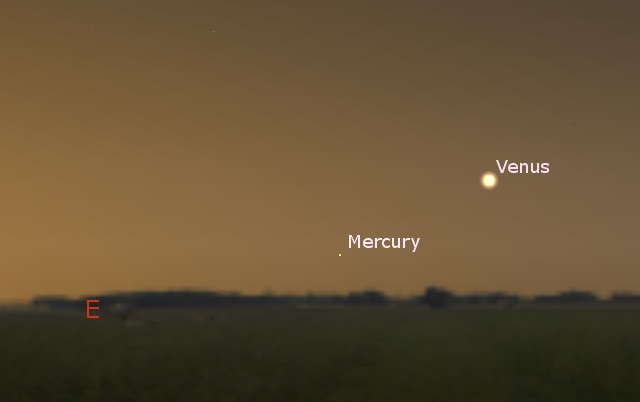 Mercury and Venus in the eastern sky Apr. 8, 2019, Credit: Stellarium / Bob Trembley.
The Moon joins Mars and the Pleiades in the western sky after dark on Apr. 8th.
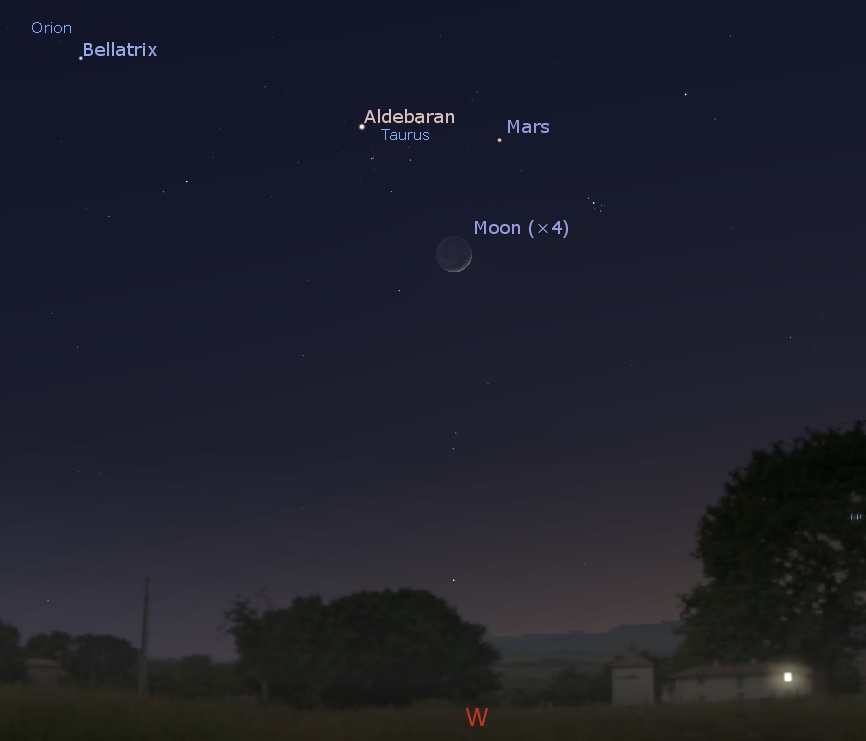 The Moon, Mars and the Pleiades in the western sky after dark on Apr. 8, 2019. Credit: Stellarium / Bob Trembley.
Coma Cluster
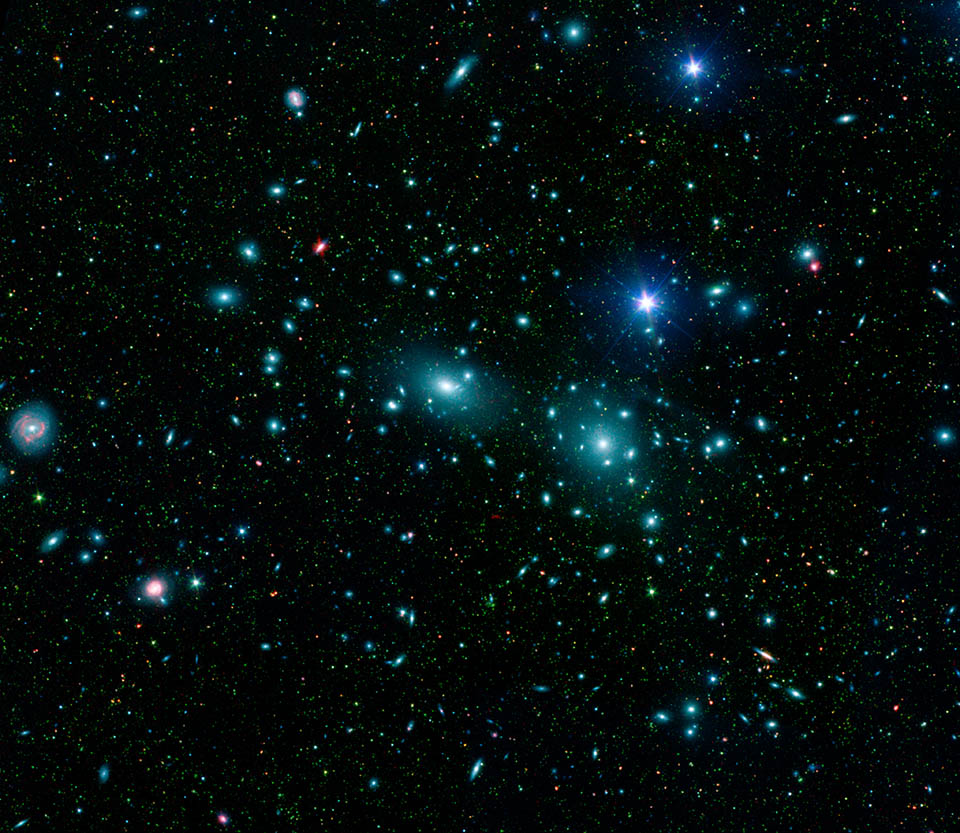 This false-color mosaic of the central region of the Coma cluster combines infrared and visible-light images to reveal thousands of faint objects (green). Follow-up observations showed that many of these objects, which appear here as faint green smudges, are dwarf galaxies belonging to the cluster. Two large elliptical galaxies, NGC 4889 and NGC 4874, dominate the cluster’s center. The mosaic combines visible-light data from the Sloan Digital Sky Survey (color coded blue) with long- and short-wavelength infrared views (red and green, respectively) from NASA’s Spitzer Space Telescope.
The Coma Cluster (Abell 1656) is a large cluster of galaxies that contains over 1,000 identified galaxies. Along with the Leo Cluster (Abell 1367), it is one of the two major clusters comprising the Coma Supercluster. It is located in and takes its name from the constellation Coma Berenices.
The cluster’s mean distance from Earth is 99 Mpc (321 million light years). Its ten brightest spiral galaxies have apparent magnitudes of 12–14 that are observable with amateur telescopes larger than 20 cm. The central region is dominated by two supergiant elliptical galaxies: NGC 4874 and NGC 4889. The cluster is within a few degrees of the north galactic pole on the sky. Most of the galaxies that inhabit the central portion of the Coma Cluster are ellipticals. Both dwarf and giant ellipticals are found in abundance in the Coma Cluster. – Wikipedia
The sketch below is how you might see the Coma Cluster in s moderately-sized amateur telescope:
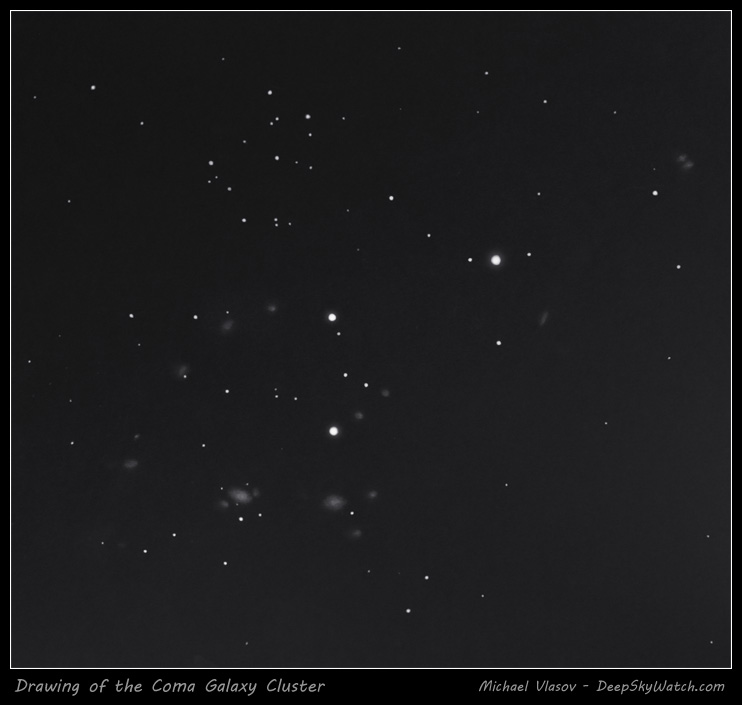 Panoramic Sketch of the Coma Cluster (Abell 1656). Credit: Michael Vlasov
Here’s an image of the Coma Cluster from the Hubble Space Telescope:
 This is a Hubble Space Telescope mosaic of a portion of the immense Coma cluster of over 1,000 galaxies, located 300 million light-years from Earth. Hubble’s incredible sharpness was used to do a comprehensive census of the cluster’s most diminutive members: a whopping 22,426 globular star clusters. Among the earliest homesteaders of the universe, globular star clusters are snow-globe-shaped islands of several hundred thousand ancient stars. The survey found the globular clusters scattered in the space between the galaxies. They have been orphaned from their home galaxies through galaxy tidal interactions within the bustling cluster. Astronomers will use the globular cluster field for mapping the distribution of matter and dark matter in the Coma galaxy cluster. Credits: NASA, ESA, J. Mack (STScI), and J. Madrid (Australian Telescope National Facility)
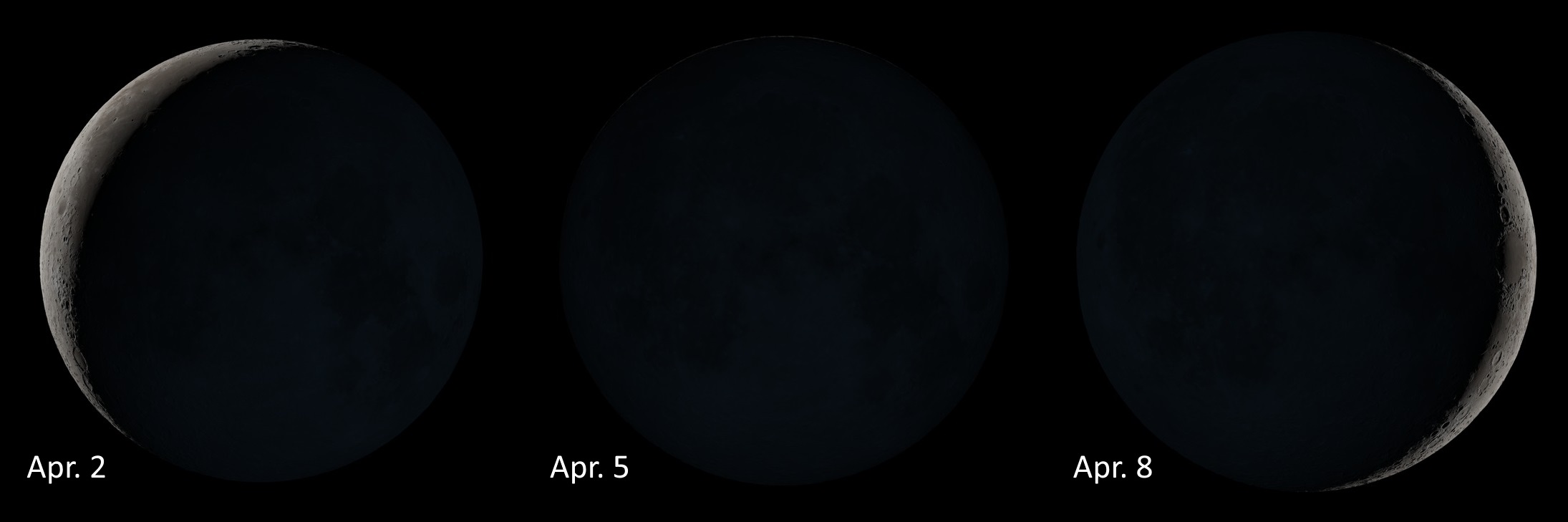
 The Moon is a waning crescent, visible low to the east before sunrise for the next 2 days. The new Moon occurs on Apr. 5th. After the 5th, the Moon will be a waxing crescent, visible toward the southwest in early evening.
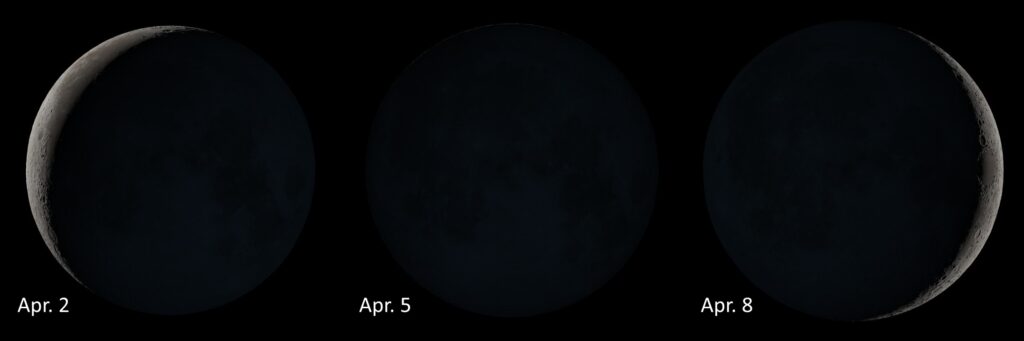 The Moon from Apr. 2-8, 2019. Visualizations by Ernie Wright / NASA’s Scientific Visualization Studio.
Moon News
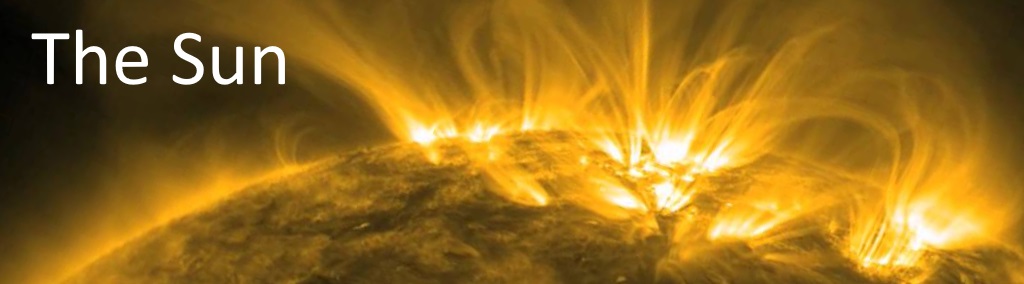
Sunspot AR2737 is rotating across the face of the Sun – just north of the equator; coronal loop activity associated with the sunspot is visible in both videos below. The northern coronal hole has diminished slightly from last week, whereas the southern hole remains open and large. Several small holes appear below the equator.
SpaceWeather.com says: “A southern hole in the sun’s atmosphere is spewing a stream of solar wind toward Earth. Estimated time of arrival: April 4th. Minor geomagnetic storms and Arctic auroras are possible when the gaseous material arrives.”
A beautiful looping prominence appeared for practically the entire day yesterday!
The solar wind speed is 389.4 km/sec (↑), with a density of 1.5 protons/cm3 (↓).
 Animated LASCO C2 Coronograph showing the solar corona above the Sun’s limb (the white circle). Credit: NASA/JPL-Caltech
You can create your own time-lapse movies of the Sun here: AIA/HMI Browse Data.
You can browse all the SDO images of the Sun from 2010 to the present here: Browse SDO archive.
Sun News
 Upcoming Earth-asteroid encounters:
| Asteroid |
Date(UT)
|
Miss Distance
|
Velocity (km/s)
|
Diameter (m)
|
| 2019 FR2 |
2019-Apr-01
|
2.1 LD
|
8.3
|
11
|
| 2019 FN1 |
2019-Apr-02
|
8.5 LD
|
9
|
14
|
| 2019 FT2 |
2019-Apr-02
|
2.4 LD
|
27.1
|
19
|
| 2019 FW1 |
2019-Apr-04
|
16.7 LD
|
8.3
|
18
|
| 2016 GE1 |
2019-Apr-04
|
3.9 LD
|
10.1
|
17
|
| 2019 FV |
2019-Apr-06
|
15 LD
|
7.7
|
59
|
| 2019 FS2 |
2019-Apr-08
|
3.2 LD
|
6.2
|
12
|
| 2019 FU |
2019-Apr-09
|
5.3 LD
|
14.2
|
86
|
| 2014 UR |
2019-Apr-09
|
13 LD
|
4.6
|
17
|
| 2016 GW221 |
2019-Apr-09
|
10.1 LD
|
5.3
|
39
|
| 2014 HD177 |
2019-Apr-10
|
6.1 LD
|
14
|
102
|
| 2019 FO1 |
2019-Apr-13
|
14.4 LD
|
9.7
|
28
|
| 2019 FH1 |
2019-Apr-13
|
18 LD
|
3.8
|
32
|
| 2012 XO134 |
2019-Apr-18
|
14.8 LD
|
11
|
56
|
| 2019 FN2 |
2019-Apr-18
|
4.1 LD
|
7.7
|
72
|
| 522684 |
2019-Apr-19
|
19 LD
|
11.5
|
214
|
| 2019 FV2 |
2019-Apr-22
|
15.7 LD
|
2.3
|
32
|
| 2018 KK1 |
2019-May-05
|
13.9 LD
|
13.9
|
71
|
| 2017 RC |
2019-May-09
|
14.5 LD
|
10.6
|
9
|
| 2008 HS3 |
2019-May-09
|
14.6 LD
|
5.3
|
162
|
| 2018 VX8 |
2019-May-12
|
6.2 LD
|
15.5
|
118
|
| 2012 KT12 |
2019-May-18
|
3.3 LD
|
3.9
|
20
|
| 2015 KQ18 |
2019-May-25
|
10.7 LD
|
13.1
|
30
|
| 66391 |
2019-May-25
|
13.5 LD
|
21.5
|
1780
|
| 2003 LH |
2019-May-28
|
15.6 LD
|
7.4
|
32
|
| 2011 HP |
2019-May-30
|
12.2 LD
|
8.4
|
135
|
Notes: LD means “Lunar Distance.” 1 LD = 384,401 km, the distance between Earth and the Moon. Table from SpaceWeather.com
Potentially hazardous asteroids: 1967 (last updated Feb. 26, 2019)
Minor Planets discovered: 794,000 (-82?)
Asteroid News
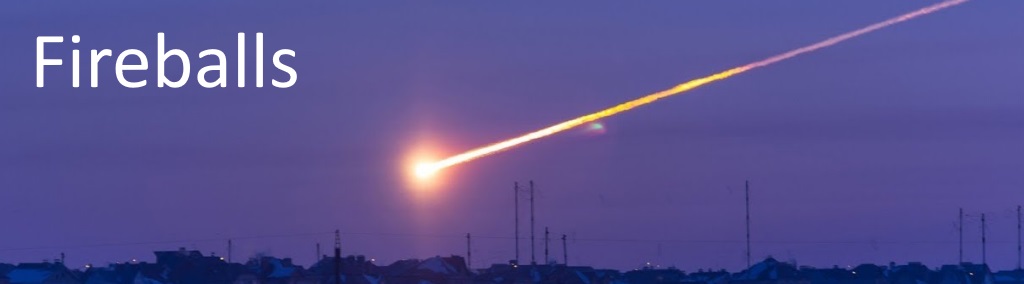
On Apr. 1, 2019, the NASA All Sky Fireball Network reported 8 fireballs.
(8 sporadics)
 In this diagram of the inner solar system, all of the fireball orbits intersect at a single point–Earth. The orbits are color-coded by velocity, from slow (red) to fast (blue). From: Spaceweather.com
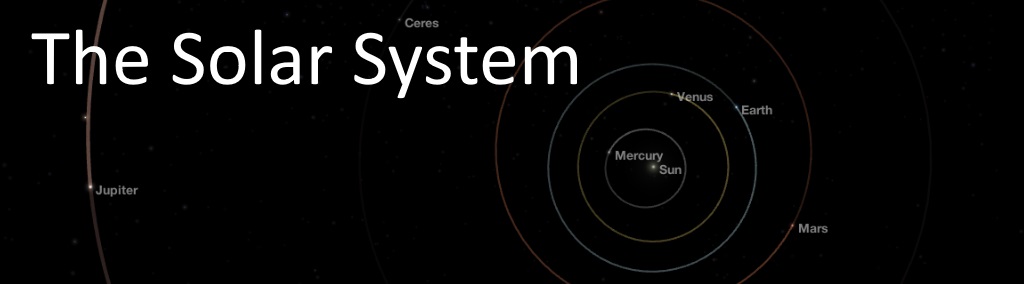 This is the position of the planets and a couple bodies in the solar system:
OSIRIS-REx – Boulders on Bennu’s South Pole
Mars InSight – NASA Working on Drill Problem
Climate